

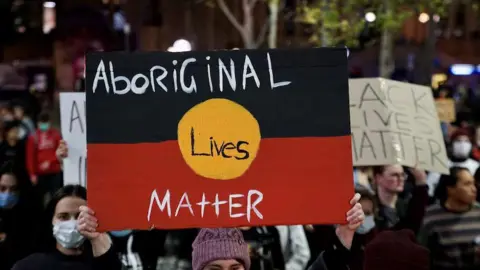
The tally of Indigenous people losing their lives while in detention in Australia has climbed to its record point since official data started in 1980.
New figures show that 33 of the 113 people who died in detention in the year ending in June have been identified as Indigenous. This represents an rise from 24 fatalities in the previous equivalent period.
Aboriginal and Torres Strait Islander people are grossly overrepresented in the criminal justice system. They make up over 33% of all prisoners, despite comprising under 4% of the country's population.
These disturbing figures come to light more than three decades after a pivotal inquiry into First Nations deaths in custody, which put forward numerous of proposed changes.
Breakdown of the Latest Statistics
Of the 33 Indigenous deaths in custody recorded between last July and this June, twenty-six took place while in prison custody, which is an rise from 18 in the prior year.
A single death was in youth detention, and the vast majority of the deceased were male.
The remaining six fatalities happened in the custody of law enforcement, defined as when someone passes away while police are holding or attempting to detain them.
The leading reason of Indigenous deaths was categorised as "self-inflicted," followed by "illness." The data found that asphyxiation was the method in eight of the deaths.
State-by-State Breakdown
The state of New South Wales recorded the highest number of Aboriginal deaths in prison custody with nine, followed by Western Australia with six. Queensland, South Australia, and the Australian Capital Territory all recorded three deaths.
The increasing number of Indigenous deaths in custody in this state is a "deeply distressing reality," the state's coroner recently said.
In October, Coroner Teresa O'Sullivan emphasised that this upward trend was not "mere statistics" and that these deaths demanded "thorough and careful scrutiny, respect and responsibility."
Profile Details and Academic Reaction
The mean age of those who died was 45 years, and eleven of the individuals were awaiting a court sentencing.
A criminal law associate professor, Amanda Porter, characterised the figures as reflecting a "national emergency" that requires "decisive action and government action."
Ms. Porter, who has been present at several official inquiries with bereaved families, said very little has improved since the 1991 national inquiry that aimed to tackle this crisis.
"It's heartbreaking to see the quantity of investigations I attend, the many funerals families have to attend, and the reality that we are 30 years past the royal commission, and the problem is getting progressively more severe," she commented.
From the time of the landmark inquiry, a approximately 600 First Nations people have died in custody, which includes six in juvenile detention centers, according to the findings.


